
Did you know we spend nearly 26 years sleeping? Keeping your linens clean is key for a healthy home. Fresh, crisp bedding makes your bedroom a cozy haven.
But fabrics can lose their shine over time due to oils and sweat. Consistent care is the secret to keeping them bright. Learning the right washing techniques keeps your linens soft and bright for years.
Key Takeaways
- Regular maintenance prevents permanent yellowing and dingy buildup.
- Proper sorting protects delicate fibers from damage during cycles.
- Using the correct water temperature enhances cleaning efficiency.
- Natural boosters like vinegar or baking soda brighten fabric safely.
- Avoiding over-drying preserves the longevity of your linens.
Preparing Your Bed Sheets for the Wash
Getting crisp, hotel-quality white sheets starts before adding detergent. Proper preparation is key for effective washing. Inspect your linens well to ensure the cleaning cycle works best.
Sorting and Checking for Stains
Before washing, lay sheets on a clean surface to check for stains. Sweat stains on white bedding need special care. Apply a baking soda and water paste to the stain and let it sit for 30 minutes.
Then, wash the sheets separately from towels or jeans. Mixing fabrics can cause pilling and block water flow. This is important for keeping your white sheets looking good.
| Stain Type | Treatment Method | Wait Time |
|---|---|---|
| Sweat/Body Oils | Baking Soda Paste | 30 Minutes |
| Food/Beverage | Cold Water Rinse | Immediate |
| General Dinginess | Oxygen Bleach Soak | 1 Hour |
Removing Bedding from the Mattress
Don’t just ball up sheets and throw them in the laundry. Shake out loose debris like crumbs or pet hair. This helps prevent clogging your machine’s filter.
Check the corners of fitted sheets for hidden items like socks or chargers. Fold sheets loosely to avoid tangling. This care protects the fibers and keeps your bedding looking great for years.
Understanding Your Washing Machine Capacity
Getting your white sheets clean starts with knowing your machine’s limits. Many people ask how to wash bed sheets in washing machine without damage. Knowing your washer’s capacity is key for top-notch cleaning at home.
Knowing what your washer can handle helps avoid wear on your sheets. Proper loading means every fiber gets the cleaning it needs.
How many bed sheets in 10kg washing machine
A 10kg washer gives you plenty of room for bedding. You can fit two queen-sized sets or one king-sized set with pillowcases. This size is great for families with big loads.
The number of sheets you can wash in a 10kg machine depends on fabric thickness. Thicker, heavier cotton sheets need more space than lighter ones. Always aim for a balanced load for the best results.
Avoiding Overloading for Better Cleaning
Stuffing the drum too much is a common mistake. Overloading stops sheets from moving, which means water and detergent can’t get around. Effective agitation is key for removing oils and keeping whites bright.
Too tight a load can leave soap residue or stains on your sheets. Always leave enough room at the top for your hand. This lets your sheets tumble freely for a deep clean every time.
Selecting the Right Detergent and Additives
Choosing the right soap and additives is key to washing bed sheets well. The products you pick greatly affect your sheets’ brightness. They can keep them looking new or make them dull and yellow.
Many detergents have harsh chemicals that harm fabric fibers. Using mild, eco-friendly detergents helps keep your sheets soft and clean. It also protects them from damage.
Choosing the Best Detergent for Whites
When buying laundry soap, look for formulas that keep whites bright. Avoid those with optical brighteners that leave residue. This residue attracts dirt, making whites look gray quickly.
Liquid detergents are best for white bedding. They dissolve well in water, preventing soap clumps in fabric. This is a common problem when washing bed sheets.
Natural Whitening Agents to Consider
For those who don’t like synthetic additives, there are natural options. Adding a half-cup of baking soda to your wash cycle can remove odors and gently lift stains.
Lemon juice is also great for brightening fabrics. It works as a mild bleacher when mixed with hot water. This helps keep your white linens looking crisp and clean.
| Additive | Primary Benefit | Best Use Case |
|---|---|---|
| Baking Soda | Deodorizing | Removing sweat and body oils |
| Lemon Juice | Natural Whitening | Brightening dull or yellowed fabric |
| White Vinegar | Softening | Removing detergent buildup |
Setting the Correct Water Temperature
Choosing the right water temperature is key when you learn how to wash bed sheets in the washing machine. The temperature affects how well your detergent works on your sheets. The right setting ensures your bedding gets a deep clean without losing its quality.
Why Hot Water is Best for White Fabrics
Hot water is great at removing oils, sweat, and dirt from your bedding. It makes the detergent work better, getting deep into the fabric. This keeps your white sheets looking bright and fresh.
Hot water also kills bacteria and dust mites in bedding. Using the hottest setting on your care label gives the best clean for white cotton sheets.
When to Use Warm or Cold Cycles
Heat is good for cleaning, but not for all fabrics. Use warm or cold cycles for delicate or special materials. High heat can damage or shrink some fabrics too quickly.
For sheets with synthetic fibers or fancy embroidery, always check the tag. Cold water is safer to prevent color loss or damage. Here’s a quick guide to help pick the right temperature for your sheets.
| Fabric Type | Recommended Temp | Primary Benefit |
|---|---|---|
| Standard White Cotton | Hot | Deep cleaning and sanitizing |
| Cotton Blends | Warm | Balanced cleaning and care |
| Delicate/Synthetic | Cold | Prevents damage and shrinkage |
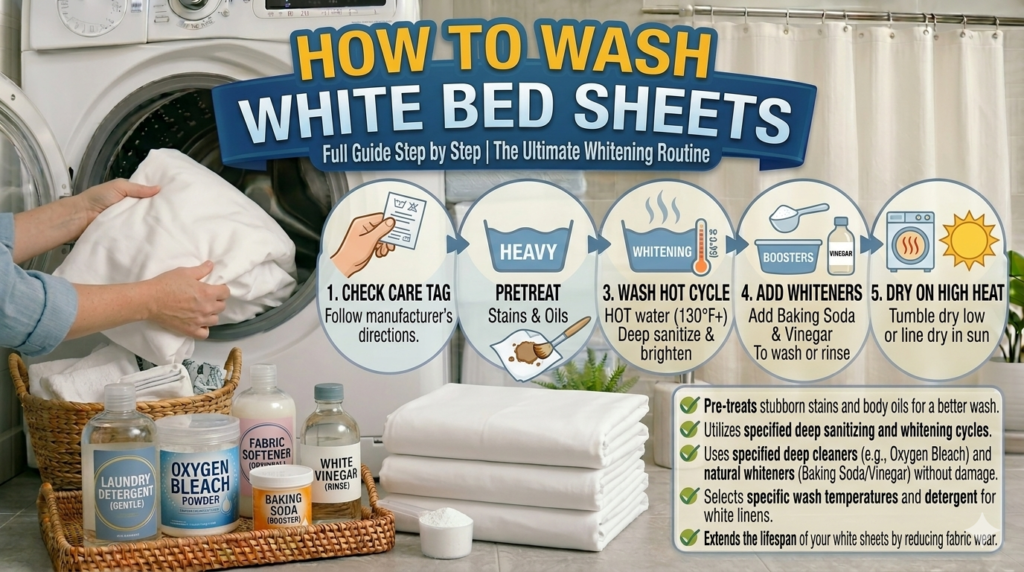
Step-by-Step Guide on how to wash white bed sheets in the washing machine
To keep your bedding looking new, follow a careful laundry routine. Learning how to wash white bed sheets in the washing machine right can make them last longer. It also keeps them looking crisp and clean, like hotel sheets. Here’s how to take care of your linens.
Loading the Machine Properly
Start by putting your sheets loosely in the drum. Never bundle them together to let water and detergent move around. Too much in the machine can cause uneven cleaning and harm the fabric.
Make sure there’s room for the sheets to move freely. If the drum is too full, your bedding will come out wrinkled and dirty. A balanced load is key for a good wash.
Selecting the Appropriate Cycle Settings
Picking the right cycle is important for your white linens. Modern machines have settings for heavy-duty cotton or delicate blends. Check the table below to find the best cycle for your needs.
| Cycle Type | Best For | Agitation Level |
|---|---|---|
| Normal/Cotton | Standard white sheets | High |
| Delicate | High thread count/Linen | Low |
| Heavy Duty | Very soiled bedding | High |
Adding Detergent and Whitening Boosters
Choose a good detergent for whites to keep them bright. Don’t use too much soap, as it can trap dirt and cause yellowing. Consistency is key when using cleaning agents.
“The secret to soft, bright whites often lies in the final rinse, where natural additives can neutralize harsh chemical residues.”
For an extra shine, add a cup of white vinegar to the rinse. It softens the fabric and removes detergent buildup. By following these tips, you’ll have fresh, clean bedding every time.
Handling Stubborn Stains Before the Wash
Even the best washing machine bed sheets can sometimes get stubborn stains. A regular cycle is good for daily cleaning, but tough stains need more. A few minutes of prep can make a big difference.
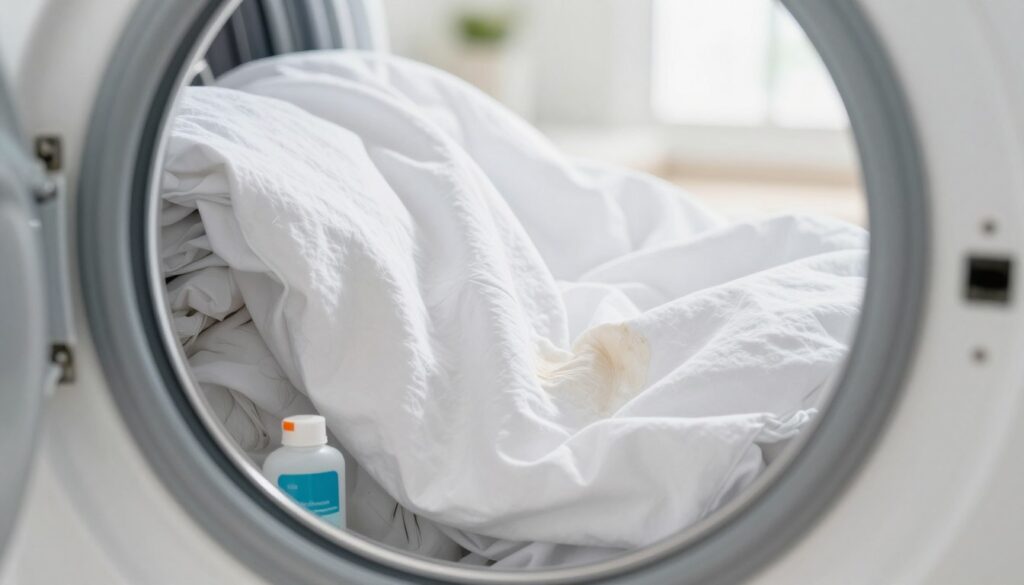
Pre-treating Common Bedding Stains
Before you start washing, check your sheets for spots like makeup, sweat, or food. Targeted spot treatment is key to removing these before they set in the wash.
Here are some household items to help:
- White Vinegar: Put a small amount on the stain and wait ten minutes. It neutralizes odors and breaks down oils.
- Hydrogen Peroxide: Great for organic stains, but test it first to make sure it won’t harm colors.
- Laundry Paste: Mix detergent and water to make a paste. Rub it gently into the stain.
Using Soaking Techniques for Dingy Sheets
For dull sheets, a deep soak is the best fix. Soaking lets cleaning agents get deep into the fabric, removing gray or yellow tints.
Borax is a strong mineral that helps with deep stains when soaked. Here’s how to use it:
- Fill a bathtub or large basin with warm water.
- Add half a cup of Borax and stir until it’s dissolved.
- Soak your sheets fully for at least four hours, or overnight.
- Drain the water and wash the sheets as usual.
This step makes your bedding look fresh and bright. It removes hidden dirt before the wash, keeping your linens in good shape.
Managing Delicate Fabrics and Thread Counts
Your washing machine bed sheets routine should change based on the material of your linens. Each fabric needs special care to keep its texture and color. Rotating your sheets regularly helps spread out the wear and tear.
Washing High Thread Count Cotton Sheets
High thread count cotton is known for its softness and durability. When washing these in your washing machine bed sheets cycle, choose a gentle or delicate setting. This helps prevent the fibers from getting stressed or pilled.
“The secret to a long-lasting bed is treating your linens with the same care you would give your favorite delicate garments.”
Using a mild, liquid detergent is key for these dense weaves. Stay away from harsh chemicals or bleach, as they can damage the fine cotton fibers early. Make sure the machine isn’t too full to let water and soap move freely between the layers.
Care Instructions for Linen and Bamboo
Linen and bamboo fabrics are soft and breathable but can be easily damaged. They usually need a cold water wash to avoid shrinkage and keep their natural shine. When using your washing machine bed sheets settings, pick the lowest spin speed to reduce wrinkles.
Bamboo, being highly absorbent, can get heavy when wet. It’s best to wash these items alone from heavier cotton towels or denim. Taking good care of them ensures your bedding stays soft and comfy for many years.
The Importance of Proper Rinsing
Proper rinsing is key to making clean laundry soft and comfy. Many people only think about the wash cycle. But, the final rinse really decides how soft and clean your linens will be. When using a washing machine for bed sheets, it’s important to remove all soap residue for fabric health.
Avoiding Detergent Buildup
Detergent buildup happens when soap stays in your bedding’s fibers. It attracts dirt and dust, making your sheets look dingy and feel uncomfortably stiff. To avoid this, add a half-cup of white vinegar to the rinse cycle.
White vinegar breaks down leftover soap, making your sheets feel fresh and soft. This natural trick helps your washing machine for bed sheets work well without leaving chemical residue.
Using Extra Rinse Cycles for Sensitive Skin
Residual detergent can irritate sensitive skin. Even top-quality soaps can cause itching or rashes if not fully rinsed. Using an extra rinse cycle is a highly recommended practice for hypoallergenic bedding.
This extra step ensures all cleaning agents are washed away. It gives you peace of mind and keeps your sleep environment clean, soft, and gentle on your skin every night.
Drying Techniques for Bright White Sheets
To get your white sheets looking crisp and hotel-quality, the drying method is key. Using a good washing machine for bed sheets is just the start. How you finish it off affects the brightness and feel of your sheets. Taking care at this stage keeps them soft and welcoming for years.

Machine Drying vs Air Drying
Air drying is the best way to keep white linens bright. Hanging them in the sun acts as a natural bleaching agent. It keeps them looking fresh without using harsh chemicals. This method also helps your bedding last longer.
If you prefer using a tumble dryer, choose a low heat setting. High heat can make fibers brittle and may turn them yellow over time. Always move your washing machine for bed sheets to the dryer quickly to avoid musty smells.
Preventing Wrinkles and Shrinkage
To keep your sheets smooth, take them out of the dryer while they’re a bit damp. Shake them out before folding or putting them back on the bed. This trick saves you from ironing later.
Shrinkage is a worry, but it’s easy to avoid. Use low-temperature cycles to keep the fabric’s weave intact. Always check the care label for the best heat setting.
| Drying Method | Brightness Benefit | Texture Result | Risk Level |
|---|---|---|---|
| Sun Drying | High (Natural Whitening) | Crisp and Fresh | Low |
| Low Heat Tumble | Moderate | Soft and Smooth | Medium |
| High Heat Tumble | Low (Risk of Yellowing) | Stiff or Brittle | High |
Choosing the right drying method is important. It goes hand in hand with using a good washing machine for bed sheets. Whether you dry in the sun or a machine, being consistent is key to keeping your sheets white.
Maintaining the Whiteness of Your Sheets
Keeping your bedding bright and fresh for years is all about long-term care. The bed sheet washing machine process is key, but how you handle your linens between washes is just as important. Sticking to consistent habits helps prevent the dulling that often happens to white fabrics.
Frequency of Washing
Washing your sheets every one to two weeks is key to stop body oils, sweat, and skin cells from building up. These substances are the main cause of yellowing over time. Waiting too long to wash can make them hard to remove from the fibers.
Consistency is your best friend when it comes to keeping your textiles looking good. A regular schedule helps your bed sheet washing machine stay effective without harsh chemicals. Gentle cleaning often is better than infrequent, hard scrubbing.
“The secret to white linens is not just the detergent you choose, but the regularity with which you refresh them. Clean fibers reflect light better, keeping your bed looking crisp and inviting.”
Storage Tips to Prevent Yellowing
Proper storage is as important as cleaning. Make sure to rotate your bedding and store spare sets in a cool, dry, dark place. Sunlight and humidity can cause white fabric to yellow and degrade faster.
Don’t store your linens in plastic bags, as they can trap moisture and lead to mildew. Use breathable cotton or linen bags instead. This keeps your sheets fresh and ready for the next wash in your bed sheet washing machine.
| Maintenance Task | Recommended Action | Benefit |
|---|---|---|
| Washing Frequency | Every 7-14 days | Prevents oil buildup |
| Storage Environment | Cool, dark, and dry | Stops yellowing |
| Storage Material | Breathable fabric bags | Prevents moisture trap |
| Rotation | Use all sets equally | Ensures even wear |
Common Mistakes to Avoid When Washing Bedding
Your bed sheet washing machine routine might be hiding some subtle mistakes that lead to premature wear. Even with the best intentions, certain habits can inadvertently dull your fabrics or cause permanent damage. By identifying these pitfalls, you can ensure your linens stay crisp and bright for years to come.
Mixing Colors with Whites
One of the most frequent errors is tossing colored items into the same load as your white linens. Even a single stray sock or a slightly tinted pillowcase can transfer dye, leaving your sheets looking dingy or gray. Always keep your whites separate to maintain their brilliant, clean appearance.
Also, avoid using chlorine bleach as a quick fix for stains. Bleaching white sheets is a common mistake that often causes yellowing, as the chemical reacts poorly with residual body oils. Instead, rely on gentle, oxygen-based whitening agents to keep your bedding pristine.
Using Too Much Fabric Softener
While you might want your sheets to feel extra soft, using too much fabric softener is a major laundry blunder. Excessive product creates a waxy buildup on the fibers, which actually traps dirt and reduces the breathability of your bedding. Over time, this residue can lead to a yellow tint that is difficult to remove.
It is better to skip the softener entirely or use a small amount of white vinegar during the rinse cycle. This natural alternative helps soften the fabric without leaving behind a heavy, oily film. Maintaining your bed sheet washing machine habits this way ensures your sheets remain fresh and comfortable.
| Common Mistake | Immediate Effect | Long-term Damage |
|---|---|---|
| Mixing Colors | Dull, gray appearance | Permanent fabric discoloration |
| Excessive Softener | Waxy, heavy texture | Trapped dirt and yellowing |
| Chlorine Bleach | Temporary brightness | Weakened fibers and yellowing |
Conclusion
Getting your bed sheets to stay bright white is a great way to improve your sleep. Now, you know how to clean and keep them looking good.
Keeping your bedding in top shape is all about consistent care. The right way to wash them helps avoid yellowing and damage. This keeps them looking new for longer.
Stay away from harsh chemicals that can harm your sheets. Instead, use gentle, natural cleaners for better results. Your high-quality cotton or linen deserves this care.
Regular cleaning routines make washing bed sheets easy. You’ll wake up to crisp, clean sheets every night. Share your tips with friends or family to keep homes clean and bright.