
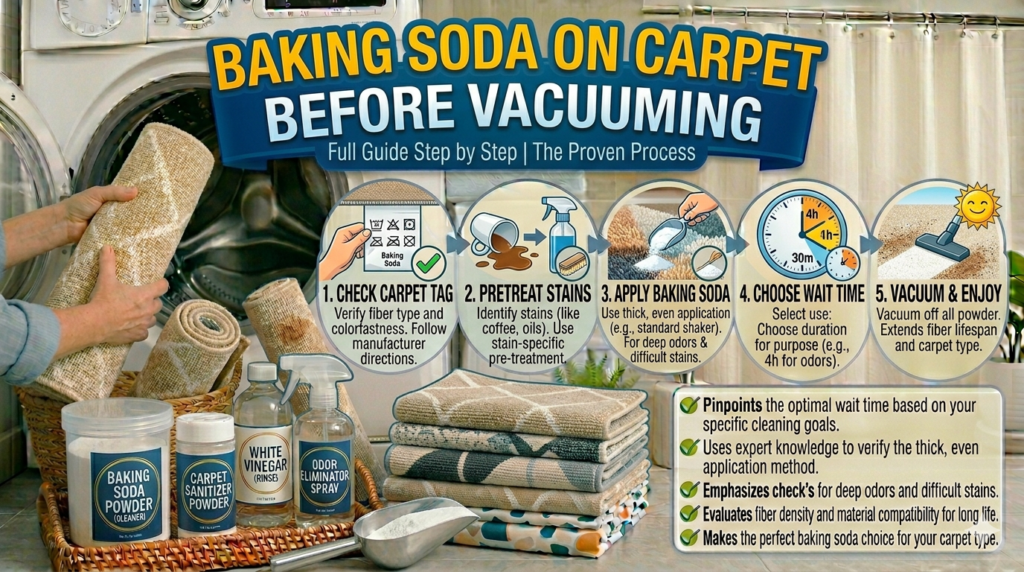
Ever thought the secret to a fresh home is in your kitchen? Many struggle with smells that regular cleaners can’t beat. Using baking soda on carpet before vacuuming is a natural trick that gets rid of bad smells without harsh chemicals.
This method absorbs moisture and traps smells in your carpet. It’s a budget-friendly solution that makes your home feel welcoming. Follow our steps to refresh your home today.
Applying baking soda on carpet before vacuuming is safe for many floors and leaves a noticeable clean. We’ll guide you through the steps to keep your floors fresh and smell-free all year.
Key Takeaways
- Natural deodorizing properties effectively eliminate stubborn household smells.
- This method serves as a cost-effective alternative to commercial cleaners.
- Proper application ensures deep fiber penetration for better results.
- The process is safe for most common household flooring materials.
- Regular maintenance helps extend the life and appearance of your rugs.
Understanding the Science of Baking Soda for Carpet Care
Many homeowners use baking soda for cleaning, but they might not know why it works so well. This simple powder is more than just a kitchen item. It’s a highly effective cleaning agent that works with your carpet fibers at a molecular level. Knowing how it works helps us see why it’s a top choice for keeping homes fresh.
How Sodium Bicarbonate Neutralizes Odors
Unlike commercial carpet fresheners, sodium bicarbonate doesn’t just cover up smells with artificial scents. It actually captures and holds onto odor particles. When you sprinkle it on your carpet, it absorbs moisture and smells that linger.
It acts like a sponge for tiny particles. Once it bonds with these smells, they’re removed when you vacuum. This leaves your home smelling clean, not just perfumed.
The Role of pH Balance in Cleaning
Baking soda’s effectiveness comes from its special chemical makeup. As an amphoteric compound, it can react with both acids and bases to neutralize them. Many household smells, like pet accidents or spills, are acidic.
When baking soda meets these acidic smells, it neutralizes them. This pH balancing act makes it great for all kinds of carpet care. It gets rid of the smell at its source, not just covering it up.
Why Put Baking Soda on Carpet Before Vacuuming
Many homeowners wonder about simple ways to clean their floors. Using putting baking soda on carpet before vacuuming can change your cleaning routine. It’s a natural, affordable way to make your home smell fresh without harsh chemicals.
Benefits for High-Traffic Areas
Places like entryways and living rooms get dirty fast. They can look dull as dirt settles deep in the carpet. A light dusting helps get rid of dirt that vacuuming alone can’t.
Think of baking soda as a pre-treatment for your floors. It’s a mild abrasive that brings dirt to the surface. This makes it easier for your vacuum to clean, leaving your floors looking significantly cleaner.
Removing Pet Dander and Lingering Smells
Pet owners often deal with smells that linger. Even regular cleaning can’t get rid of dander and oils. This method helps get rid of these smells at the source, not just covering them up.
The baking soda’s alkaline nature breaks down acidic smells in the carpet. This is why it’s a top choice for pet owners. It makes your home fresh and inviting for everyone.
Preparing Your Carpet for the Treatment
Getting your carpet clean starts before you use baking soda. Organizing your space helps the powder cover every fiber. This ensures a clean floor all over.
“By failing to prepare, you are preparing to fail.”
Clearing the Floor and Removing Debris
First, clear the area of small items like toys and shoes. These can stop the powder from reaching all the fibers. This leaves some parts of your carpet untreated.
Try to move lighter furniture to get to hidden spots where dust and allergens hide. After clearing the floor, sweep or vacuum to get rid of hair and crumbs.
Getting rid of surface dirt lets the baking soda reach deeper. A clean surface is key for a good treatment.
Testing for Colorfastness and Material Sensitivity
Even though baking soda is safe for most synthetic carpets, do a patch test first. This step is important for your carpet’s safety and your peace of mind.
Choose a small, hidden spot like a closet or behind a door. Put some baking soda on it, wait, and then vacuum. If it looks the same, you’re good to go.
Watch for any color changes or texture issues. If nothing’s different, you can clean the rest of your home safely. Always check material safety before trying new cleaning methods.
Step by Step Guide to Sprinkling Baking Soda on Carpet Before Vacuuming
Learning to sprinkle baking soda on carpet before vacuuming can change your cleaning game. This easy method pulls out hidden odors from deep in the carpet. By following a few steps, you can make your floors feel new again without a mess.
Choosing the Right Amount of Baking Soda
When you sprinkle baking soda on carpet before vacuuming, a little goes a long way. You don’t need to cover the floor in a thick layer to get rid of smells. A light dusting is enough to tackle most household odors.
Too much powder can make your vacuum work too hard. It might clog your filters or leave a white residue. Keep the layer thin for a clean and efficient process.
Techniques for Even Distribution
The key to success is how you apply the powder. Instead of pouring baking soda on carpet before vacuuming from the box, use a kitchen sifter or a shaker jar. This method creates a fine, even layer on the carpet.
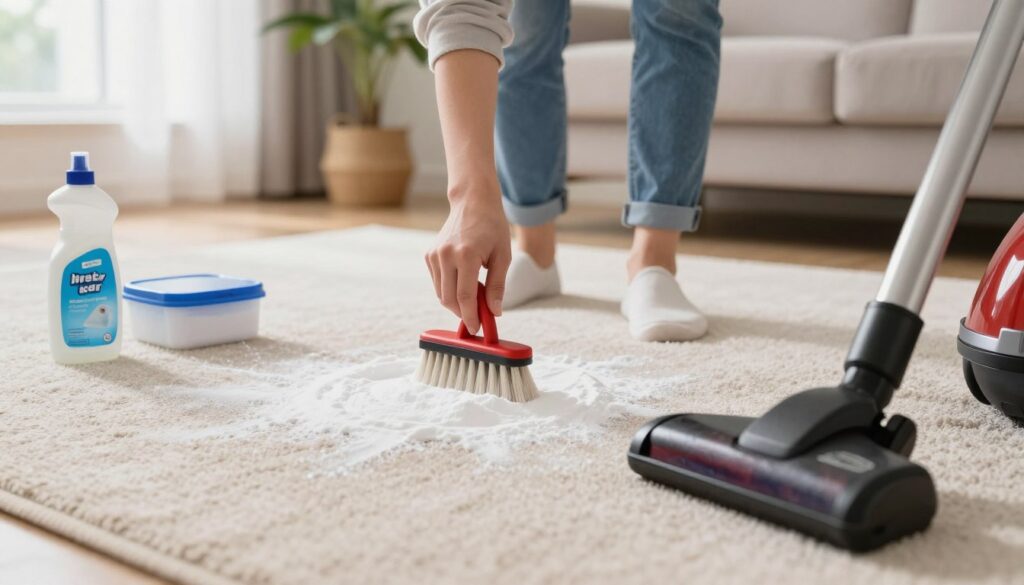
Work in small areas to control the application. If you see clumps, use a soft-bristled brush to spread the powder evenly. This helps the baking soda reach the carpet’s base, where odors hide.
Allowing Sufficient Dwell Time for Maximum Effect
When using baking soda on carpet before vacuuming, patience is key. The powder needs time to soak up moisture and neutralize odors. Let it sit for at least 15 to 30 minutes for light cleaning.
For tougher smells, you might need to leave it for an hour or more. Make sure the area stays dry to avoid clumps. After the time passes, vacuum to remove the freshness.
| Application Step | Recommended Action | Expected Benefit |
|---|---|---|
| Preparation | Use a sifter for application | Prevents clumping and waste |
| Distribution | Light, even dusting | Deep fiber penetration |
| Dwell Time | Wait 30+ minutes | Maximum odor neutralization |
| Removal | Slow, steady vacuuming | Clean, refreshed carpet |
Can I Put Baking Soda on Carpet Before Vacuuming Every Time
Are you wondering if you should put baking soda on your carpet before vacuuming every time? This natural deodorizer works great, but using it too often can cause buildup in your carpet fibers. It’s important to find the right balance to keep your floors fresh without causing long-term problems.
Frequency Recommendations for Routine Maintenance
For most homes, using baking soda on carpet before vacuuming once or twice a month is enough to control odors. If you have pets or a lot of foot traffic, you might need to vacuum more often. But vacuuming your carpets every time is usually not recommended for regular cleaning.
Using too much powder can make it hard for your vacuum to get rid of all the particles. It’s better to vacuum based on your home’s needs, not every day.
Signs of Over-Application
Watch for signs that you’re using too much product. If you see a white haze or dusty residue on your carpet after vacuuming, you’ve used too much. This means your vacuum is having trouble getting the powder out of the carpet.
Another sign is if your vacuum’s suction power goes down or if your filter gets clogged. Remember, too much powder can hurt your vacuum’s motor. If your vacuum is working harder than usual, use less powder to protect it and your floors.
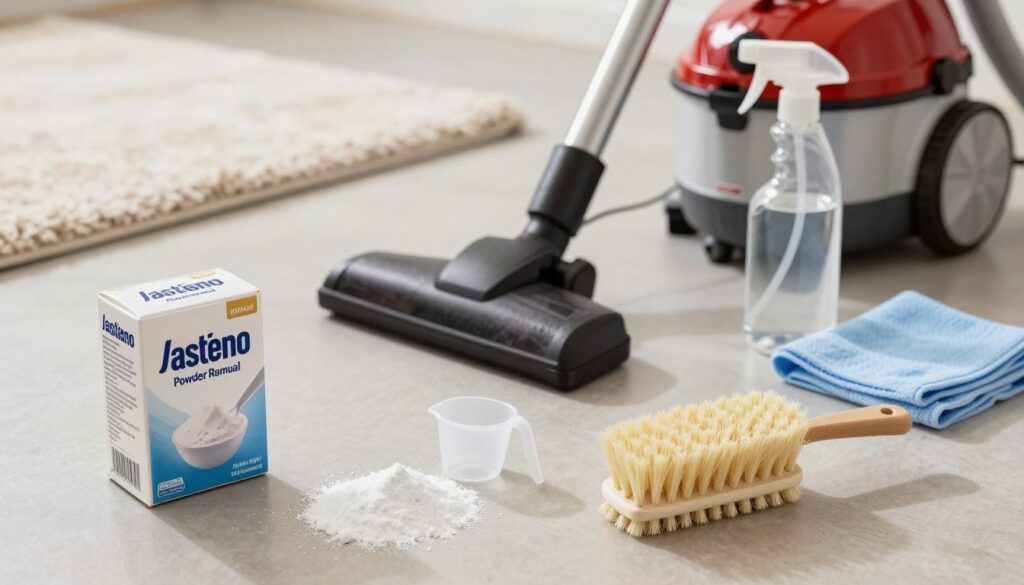
Essential Tools for the Process
Having the right tools makes cleaning carpets easier. The cleaning agent does most of the work. But, the right equipment helps remove residue well.
Using the right tools keeps your floors looking great. It also prevents damage to your vacuum or carpet fibers.
Selecting the Best Vacuum for Powder Removal
Not all vacuums are good for powdery substances. Look for ones with high-quality HEPA filtration systems. These filters keep particles from getting back into the air or clogging the vacuum.
If you have a bagless vacuum, empty it often. Consistent airflow is key for strong suction. Don’t fill the dust bin too much to avoid motor damage.
Using Brushes to Work the Powder into Fibers
Sometimes, powder needs extra help to get deep into the carpet. A soft-bristled brush is great for this. It gently agitates the fibers, helping the cleaning agent reach trapped odors and debris.
Brush with light, sweeping motions to avoid damaging the carpet. You don’t need to scrub hard. Just work the powder down until it’s gone. This step significantly improves your cleaning results, making your home smell fresh and clean.
Safety Precautions and Possible Risks
Before you sprinkle powder on your living room, think about these important safety tips. Baking soda is a natural cleaner, but using it wrong can harm your equipment or floors. Preparing correctly helps you clean without stress.
Protecting Your Vacuum Motor and Filters
Baking soda’s fine texture is a big risk for your vacuum. Too much powder can get past filters and damage the motor. Make sure your vacuum has a good HEPA filter to catch these particles.
Also, never use baking soda on a wet carpet. Wet powder turns into a paste that can block your vacuum’s hoses and brushes. This can weaken your vacuum’s suction and might even break it.
When to Avoid Using Baking Soda on Delicate Rugs
Not every rug can handle this DIY treatment. Antique, hand-knotted, or silk rugs might get damaged by baking soda. It can change their color or leave a hard-to-remove stain.
If you have a fancy rug, check the care label first. If you’re unsure, it’s safer to get it professionally cleaned. This keeps your rug looking great for a long time.
| Risk Factor | Potential Consequence | Prevention Strategy |
|---|---|---|
| Damp Carpet | Clumping and clogging | Ensure surface is bone dry |
| Excessive Powder | Motor strain | Use a light, even dusting |
| Delicate Fibers | Fiber damage or fading | Avoid on silk or antiques |
| Poor Filtration | Dust release | Use HEPA-rated vacuum bags |
Troubleshooting Common Issues
Even the most careful cleaning routines can sometimes hit a snag. Using baking soda is a great way to freshen your floors. But, you might sometimes face minor setbacks like lingering powder or accidental moisture exposure.
These situations are usually easy to fix with a few simple adjustments. Knowing how to handle these hiccups will help you keep your home looking pristine without stress.
Dealing with White Residue After Vacuuming
If you notice a faint white haze on your carpet after vacuuming, it usually means you applied too much powder. The fibers may be holding onto the excess particles, if your vacuum lacks strong suction or a high-quality HEPA filter.
To fix this, simply vacuum the area again using slow, overlapping strokes. If the residue persists, a stiff-bristled carpet brush can help loosen the trapped particles before you pass the vacuum over the spot one last time.
What to Do if the Baking Soda Gets Wet
Accidents happen, and if liquid spills onto the baking soda before you vacuum, it can turn into a thick, pasty mess. Do not panic, as this is a common issue that is manageable with the right approach.
First, use a clean paper towel to blot up as much moisture as possible without rubbing the fibers. Once the area is dry to the touch, use a vacuum with a hose attachment to lift the clumped powder away from the carpet backing.
| Issue | Primary Cause | Recommended Solution |
|---|---|---|
| White Residue | Over-application | Repeat vacuuming slowly |
| Clumping | Moisture exposure | Blot dry and use hose |
| Persistent Odor | Deep-set bacteria | Professional cleaning |
If you find that the baking soda has caused a permanent stain or if the odor remains despite your best efforts, it may be time to call in professional carpet cleaners. Experts have access to industrial-grade equipment that can extract deep-seated debris that standard household vacuums simply cannot reach.
Advanced Tips for Stubborn Stains and Odors
When your carpets face extreme challenges, it’s time to step up your cleaning game. Standard methods work great for everyday messes. But, some stains need a more proactive solution to keep your home fresh.
Using simple additives or special techniques can tackle tough odors and stains. These methods protect your carpet fibers and sanitize deeply.
Combining Baking Soda with Essential Oils
Want your home to smell like a spa? Mix essential oils with baking soda. Lavender, lemon, or eucalyptus oils are great for a natural, long-lasting scent.
Start by mixing 10 to 15 drops of oil with a cup of baking soda in a glass jar. Shake well to mix the oil evenly. Then, sprinkle it on your carpet.
Always test a small area first to avoid staining your carpet. Moderation is key to avoid a greasy residue that attracts dirt.
Targeting Specific Pet Accidents
Pet accidents need more than just surface cleaning because they soak deep into the carpet. Baking soda is good for absorbing moisture but might not break down pet urine proteins.
For these tough cases, use an enzymatic cleaner first to tackle the biological parts of the stain. After treating and drying, add baking soda to absorb any remaining moisture and smells.
Don’t scrub hard, as it can push the stain deeper or damage the carpet. Gently work the powder into the area. Let it sit for a few hours before vacuuming to ensure a thorough clean.
Comparing Baking Soda to Commercial Carpet Powders
Ever thought if pricey carpet fresheners are better than baking soda from your kitchen? Both aim to make your home smell better, but they do it differently. Knowing how they work helps you choose what’s best for you and your wallet.
Cost-Effectiveness and Natural Ingredients
Using baking soda for carpet care is super cheap. A box costs much less than a can of commercial powder. It’s just baking soda, so you don’t have to worry about harmful additives.
Commercial products, though, are pricier because of marketing and complex formulas. They’re mostly fragrance and fillers, not just baking soda. Choosing natural means you save money and avoid unwanted chemicals.
Comparing Scent Profiles and Chemical Additives
Commercial powders have strong, lasting scents. These smells hide odors but don’t get rid of them. They can also upset allergies in pets or family members.
Baking soda, on the other hand, absorbs and neutralizes odors naturally. If you prefer the scents of store-bought products, add your favorite essential oil. This way, you get a natural, personalized aroma for your carpet.
| Feature | Baking Soda | Commercial Powders |
|---|---|---|
| Primary Cost | Very Low | Moderate to High |
| Ingredients | 100% Natural | Synthetic Fragrances |
| Odor Strategy | Neutralization | Masking |
| Customization | High (Add Oils) | None |
Conclusion
Keeping your home clean is easy with simple habits. Using Arm & Hammer baking soda is a natural way to make your floors smell fresh every day. This method keeps your home smelling good without using harsh chemicals.
Regular care is key to protecting your floors. It ensures your carpets are free from bad smells and small debris. Pair this with vacuuming from brands like Dyson or Shark for the best results.
Don’t forget about professional deep cleaning for your carpets. It’s important to get rid of dirt that’s hard to reach. This will make your floors look better and last longer.
Share your clean home with us on social media. Post pictures of your living room and tell us about your favorite scents. We love hearing how you make your home welcoming for your family.