
Have you ever thought about how your bedtime routine might harm your favorite sheets? Many find it hard to balance deep cleaning with keeping fabrics in good shape.
Knowing what temp do you wash bed sheets is key to a clean sleep space. The right laundry habits can make your bedding last five to ten years longer.
This guide covers the best laundry practices. We’ll go through each step to keep your home clean and fresh.
Key Takeaways
- Hot water kills dust mites and allergens well.
- Cold settings prevent fabric shrinkage and color loss.
- Always check the care label for specific material needs.
- Regular cleaning cycles keep natural fibers strong.
- Proper drying methods are as important as water settings.
Understanding the Importance of Water Temperature for Bedding
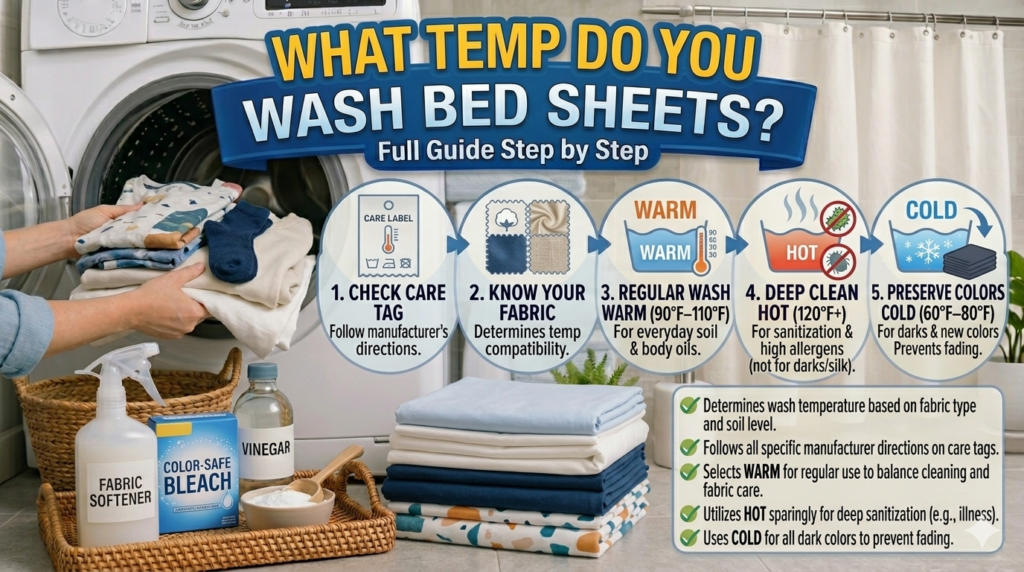
Choosing the right water temperature is key for your sheets and hygiene. Many ask what temp should bed sheets be washed at for a clean without damage. This balance is vital for a healthy sleep space for your family.
Why Temperature Matters for Hygiene
Hot water is incredibly effective at killing germs and allergens in bedding. When deciding on the temperature, remember that heat is a natural sanitizer. This is critical for those with allergies or sensitive skin.
Using warmer water regularly helps remove oils and sweat that cleaners might miss. A consistent cleaning routine keeps your bed a safe and sanitary sanctuary for rest.
The Impact of Heat on Fabric Integrity
Heat is great for cleaning but can harm fine threads and delicate materials. Too much heat can cause fading, thinning, and damage to elastic fibers. When wondering what temp should bed sheets be washed at, consider the need for cleaning versus fabric durability.
High heat can shrink or harden natural fibers like cotton. To preserve your linens, use the hottest settings only for deep cleaning. This balance ensures your bedding stays luxurious and fresh for years.
Determining what temp do you wash bed sheets
Ever wondered what temp should bed sheets be washed at? You’re not alone. Choosing the right setting is key for cleaning without damaging the fabric. Different fabrics and dirt levels need different temperatures.
The Case for Cold Water Washing
Cold water is best for delicate materials like silk and satin. It keeps fibers from shrinking and losing shine. It also removes stains like blood and sweat without heat damage.
When to Use Warm Water Cycles
Warm water is ideal for most cotton and synthetic blends. It cleans well without harming the fabric. If you’re unsure what temp do you wash bed sheets, warm is a safe choice.
The Role of Hot Water for Sanitization
Hot water kills dust mites and allergens. It’s great for white cotton sheets after illness. But, high heat can wear out bedding faster.
| Fabric Type | Recommended Temp | Primary Benefit |
|---|---|---|
| Silk & Satin | Cold | Prevents fiber damage |
| Cotton Blends | Warm | Optimal cleaning balance |
| Heavy Linens | Hot | Deep sanitization |
| Microfiber | Warm | Maintains texture |
Always check the care label before washing. Knowing what temp should bed sheets be washed at keeps your sleep space fresh and comfy for years.
Identifying Your Sheet Material and Care Requirements
Every set of sheets needs a special cleaning method. Different materials have their own needs to avoid damage or shrinkage. Knowing your material helps you choose the right what temp should i wash bed sheets to keep them soft and fresh.
Cotton and Percale Care Guidelines
Cotton is known for being breathable and durable. You can usually wash it in warm water to remove oils and sweat. For white or dirty sheets, hot water is safe and keeps them bright.
Percale, a cotton weave, also does well with these settings. Always check the tag, but warm cycles usually work best for keeping them clean and intact.
Handling Delicate Silk and Satin Sheets
Silk and satin need gentle care to keep their threads and shine. They can get damaged by high heat or rough washing. Use cold water and the delicate cycle on your machine.
Choose a mild detergent for these fabrics. Avoid harsh chemicals or bleach to prevent damage. Caring for these sheets keeps them smooth and comfy for a long time.
Washing Synthetic and Microfiber Blends
Synthetic materials like polyester or microfiber are known for being wrinkle-free. For these, use cool or warm water when washing. High heat can harm the fibers and make them less soft.
These fabrics dry fast, so use low dryer settings. Following these tips helps avoid laundry mistakes. See the table below for quick guidance on washing your bedding.
| Fabric Type | Recommended Temp | Cycle Setting |
|---|---|---|
| Cotton/Percale | Warm/Hot | Normal |
| Silk/Satin | Cold | Delicate |
| Microfiber | Cool/Warm | Permanent Press |
Preparing Your Bedding for the Laundry Cycle
Ever wondered what temp should i wash bed sheets? The key to a great wash is more than just the temperature. Taking a few minutes to sort your linens makes them soft, clean, and last longer.

Checking Care Labels for Manufacturer Instructions
Every set of sheets has its own needs based on the material. Always check the care tag in the corner of your fitted sheet or pillowcase first.
“Following the manufacturer’s instructions is the single most effective way to prevent premature fabric wear and tear.”
These labels tell you if your sheets can handle hot water or need a gentler wash. Not following these can cause shrinking, fading, or damage to the fibers.
Pre-treating Stains and Body Oils
Bedding often picks up body oils and sweat that can build up. If you see spots or discoloration, treat them before washing.
- Apply a small amount of mild detergent directly to the stained area.
- Gently rub the fabric together to help the cleaner penetrate the fibers.
- Let the treatment sit for at least ten minutes to break down stubborn oils.
Pre-treating these areas makes your wash more effective. This step helps you decide what temp should i wash bed sheets for a clean wash.
Sorting Sheets by Color and Fabric Type
Don’t mix heavy towels or jeans with your delicate bed linens. Sorting prevents damage and keeps colors bright.
Always group items by:
- Color: Keep whites separate from darks to avoid unwanted bleeding.
- Fabric: Separate heavy cottons from delicate silk or synthetic blends.
- Weight: Avoid washing heavy items with lightweight sheets to prevent tangling.
Sorting your laundry right is key. It lets water move freely, ensuring every thread gets the care it needs.
Step-by-Step Guide to Washing Your Sheets
Washing your sheets right keeps them lasting longer and makes sleeping better. By following a clear plan, you can keep your linens looking good and feeling fresh.
Loading the Washing Machine Correctly
Don’t overload your washing machine. Sheets need room to move and clean well.
For machines with a center agitator, wrap sheets loosely around it. This avoids tangling and stretching, keeping your fine linens in top condition.
Selecting the Right Detergent and Additives
Picking the right cleaner is key. A quarter-cup of liquid detergent is usually enough for a load of sheets.
Too much soap can make fabric stiff or scratchy. Use mild, fragrance-free detergents for soft, inviting bedding.
Choosing the Appropriate Cycle Settings
Choosing the right cycle settings is important. Many wonder what temperature is best for washing bed sheets.
Warm water is best for most cotton blends to remove oils and sweat. Always check the care label to avoid damage to delicate fibers.
Managing Common Laundry Challenges
Even with the best intentions, your bedding might not feel as fresh as you want. If you’re wondering what temp should i wash bed sheets to solve laundry problems, you’re in the right spot. Fixing these issues makes your sleep space healthier all year round.
Removing Dust Mites and Allergens
Regular washing is the best way to fight off tiny irritants. Washing your sheets once a week gets rid of dust, dead skin, and oils. Consistency is key to keep your bed free from allergens.
To kill dust mites, use hot water. When thinking about what temp should i wash bed sheets for cleaning, hot water is usually best. Always check the fabric care labels to make sure it can handle high temperatures without damage.
Dealing with Hard Water Issues
Hard water has lots of minerals like calcium and magnesium. These minerals make your sheets feel stiff and scratchy. They also trap dirt and detergent in the fabric.
To solve this, add a water softener or white vinegar to your rinse. This helps remove mineral deposits and keeps your sheets luxuriously soft. Using a bit more water can also help rinse away minerals better.
Preventing Excessive Wrinkling and Tangling
Fitted sheets often ball up and tangle with other laundry. This stops them from getting clean and causes wrinkles. To avoid this, wash your sheets alone, not with heavy items.
Also, don’t overload your washing machine. Give your bedding plenty of room to move so water and detergent can get around. These small changes help keep your bed fresh and comfy every night.
Drying Techniques to Complement Your Wash
After washing your sheets, how you dry them affects their comfort and life span. The washer takes care of cleanliness, but drying decides the final feel and fit of your bedding.
Air Drying Versus Machine Drying
Air drying is the best way to keep delicate fibers in top shape. Hanging your sheets outside avoids the damage from machine heat and stress. It also keeps whites bright and stops shrinkage from high heat.
But, many like the quickness and ease of a dryer. A dryer can make your sheets extra soft. If you use a dryer, pick a low heat to protect your sheets.
Setting the Correct Dryer Temperature
Choosing the right dryer heat is key to avoid damaging your bedding. Most dryers have settings for different fabrics. Always pick low or medium heat for sheets to prevent damage.
High heat can make synthetic blends hard and natural fibers lose their softness. If unsure, use a lower heat and dry a bit longer. This gentle method keeps your sheets soft and inviting.
Knowing When to Remove Sheets from the Dryer
Timing is key when taking out your laundry. Try to remove sheets when they’re slightly damp. This helps avoid ironing and keeps the fabric soft.
Don’t leave sheets in the dryer too long. It can cause wrinkles and a musty smell. If you can’t fold them right away, shake them out and lay them flat to air-dry. This keeps your bedding fresh and crisp.
| Drying Method | Best For | Key Benefit | Drawback |
|---|---|---|---|
| Air Drying | Natural Fibers | Maximum Longevity | Takes More Time |
| Low Heat Tumble | Cotton Blends | Added Softness | Risk of Shrinkage |
| Medium Heat | Synthetic Fabrics | Fast Drying | Potential Fiber Damage |
Frequency of Washing for Optimal Health
Having fresh linens is key for a healthy home. A regular laundry routine keeps your bed clean and hygienic. This routine improves your sleep and protects your skin.
Recommended Weekly Washing Schedules
Washing bed sheets once a week is best for most homes. It removes dead skin, oils, and dust mites that build up. Regular washing stops these allergens from getting into the fabric.
If weekly washing is hard, pick a specific day for bedding. This makes it a habit and keeps your sheets clean. It also makes your linens last longer by avoiding heavy dirt.
Signs Your Sheets Need Immediate Cleaning
While weekly washing is good, some situations need quicker action. If you’ve had a cold or flu, wash your sheets right away. This step is crucial for your health and stops reinfection.
Wash your sheets more often if you sweat a lot at night or have pets in bed. Visible stains, bad smells, or skin problems mean it’s time for a fresh change. Don’t wait if your bed feels unclean.
Seasonal Adjustments for Bedding Maintenance
Your laundry habits should change with the seasons. In summer, you might sweat more, so wash your sheets more. High humidity can also lead to mold or mildew if sheets stay damp.
In winter, you might not need to wash as often if your room is cool and dry. But, if you use thick blankets, wash your base sheets regularly. Adjusting your routine to the weather keeps your bed healthy all year.
Common Mistakes to Avoid When Washing Sheets
Many people unknowingly shorten their sheets’ life with simple laundry mistakes. It’s tempting to wash everything at once, but careful habits are key to keeping bedding fresh. Knowing the right steps helps avoid wear and tear.
Overloading the Machine
Stuffing the washing machine too full is a common error. Sheets need room to move in the water for a clean wash. Without it, they can get tangled, stretched, or torn.
Using Excessive Detergent or Fabric Softener
Many think more soap means cleaner sheets. But too much detergent leaves a sticky residue that traps dirt. Fabric softeners can also make sheets less breathable and soft over time.
“The secret to long-lasting linens is simplicity; avoid harsh chemicals and give your fabrics room to breathe during the wash cycle.”
Ignoring Water Temperature Warnings
Always check the care label to see what temp do you wash bed sheets correctly. Ignoring these instructions can cause pilling, color fading, or shrinkage. Hot water can also damage delicate fabrics over time.
| Common Mistake | Immediate Consequence | Long-term Impact |
|---|---|---|
| Overloading | Poor cleaning | Fabric tearing |
| Excess Soap | Residue buildup | Skin irritation |
| Wrong Heat | Color fading | Material shrinkage |
Being aware of these mistakes helps keep your bedding fresh and comfy. Always check what temp do you wash bed sheets before washing to protect your investment.
Conclusion
Caring for your bed sheets is easy and makes a big difference in your sleep. You now know how to keep your high-quality linens from brands like Brooklinen or Parachute in great shape.
By following these laundry tips, your sleep space stays cozy and inviting. Keeping up with a routine helps keep your sheets soft and strong.
Check your laundry supplies and habits this weekend. Changing your water temperature or detergent can make a big difference in how your sheets feel.
We invite you to share your laundry tips or favorite fabric care products. Your stories help others in our community get a great night’s sleep. Start your next wash cycle with confidence and enjoy the fresh, clean feel of your bedding.